



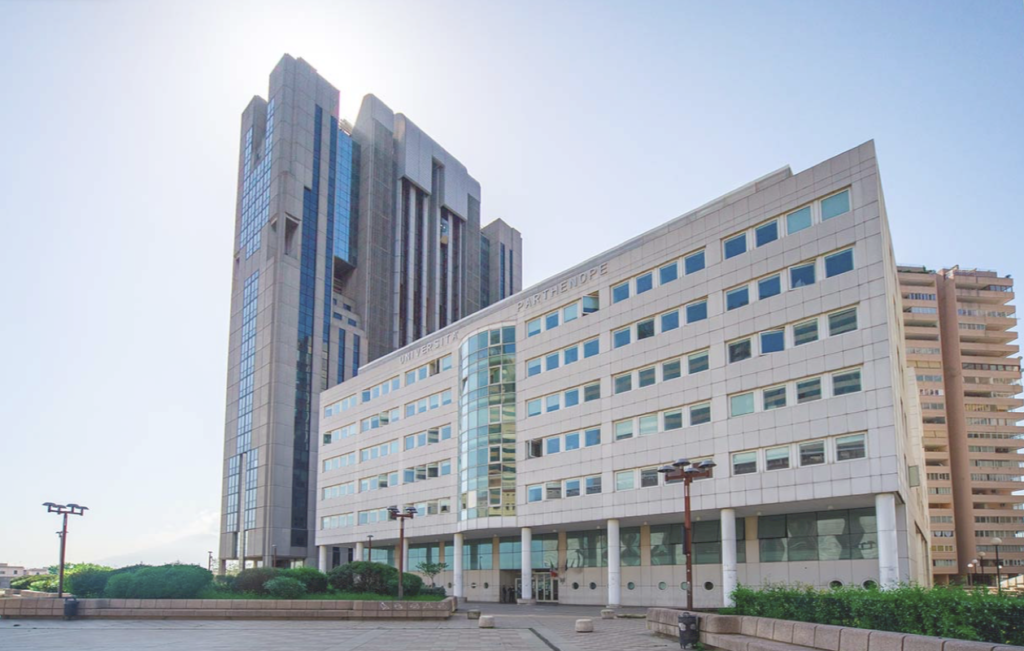
The MArC – Museum of Computational Architectures was founded in 2012 by Professor Raffaele Montella at the University of Naples “Parthenope” from a vision cultivated over decades: to preserve the intellectual and technological heritage of computation while inspiring new generations of scientists and engineers.
Embedded within the Department of Science and Technology, MArC is more than a museum. It is an educational and cultural laboratory where the history of computational architectures becomes a powerful tool for understanding contemporary research and innovation.
From early electronic components and 1970s computing systems to 1990s mobile technologies, pioneering video game platforms, and today’s high-performance and distributed computing infrastructures, the collection traces the evolutionary path that has shaped modern computer science. Each artifact—donated by individuals who chose to entrust their technological memories to the University—embodies both historical relevance and human experience.
For students, MArC provides perspective: today’s cloud computing, artificial intelligence, mobile platforms, and HPC systems are not sudden revolutions, but the result of decades of experimentation, constraint, and vision. For researchers, it offers continuity: understanding architectural evolution deepens insight into present challenges in distributed systems, data-intensive science, and computational modeling. For the broader community, it stands as a testimony to the transformative power of computation in society.
MArC affirms a simple yet profound idea: innovation without memory is fragile. By situating the present within a continuum of technological progress, the museum strengthens the University’s mission to educate, research, and innovate responsibly.
In connecting the pioneering achievements of the past with the aspirations of the future, MArC embodies the belief that the present is where legacy and possibility meet—and where the next chapter of computation begins.
Download the MArC poster in [Italian][English]
It is not old tech from the junk; it is our history!
The Museum of Computational Architectures at the University of Naples “Parthenope” offers a compelling journey through the evolution of computing technology, from early hardware to modern systems. Beginning with foundational components such as ferrite core memory RAM—a pivotal storage technology of the 1970s—the collection highlights the dramatic progression of computational architectures. Contrasting historic components with advanced systems like a Blue Gene P high-performance computing node reveals the scale and capability shifts that have occurred over decades.
In the realm of mobile computing, the museum showcases the evolution of portable devices, from early 1990s mobile phones like the NEC P7 and Motorola D160, to the iconic Nokia 3210 (1999), and early handhelds such as the Compaq iPAQ palm and early MP3 players.
Visitors can also explore the history of personal computing with early portable computers such as the Amstrad PC1640, HALiKAN LX-20, and home systems, including the Commodore VIC-20 (1982).
Storage technology is richly represented as well, with early floppy disks and hard drives displayed alongside their controllers, illustrating the dramatic miniaturization and capacity growth over time.
The museum’s video games section immerses visitors in entertainment computing history, showcasing early consoles like the SEGA Master System and related peripherals such as the Sega Light Phaser controller, highlighting the evolution of gameplay interaction.
Together, these artifacts chart an engaging narrative of technological innovation—each object a milestone in the story of computation and its impact on our digital world.
As your excitament is growing for visiting us physically, get a taste from our virtual tour!
Don’t by shine, be a contributor!
Do you have an old computer, mobile phone, component, console, or technological device that once represented innovation? Give it a new life at the MArC – Museum of Computational Architectures.
By donating your historical tech items, you help preserve the memory of computational progress and contribute to educating future generations of students, researchers, and innovators. Each donated artifact is carefully cleaned, restored when possible, documented, and respectfully exhibited as part of the museum’s collection.
What may no longer serve a practical purpose can still carry immense historical and emotional value. Your contribution becomes part of a shared technological heritage.
Join us in preserving the story of computation. Donate, and let your technology inspire the future.